FAQ

Common questions about lessons, attending and more, gathered in one place. Jump to the topic you want to know about.
For first-time visitors
Is it all right if I am a beginner?
Yes, it is.
Many people come to us saying “I don’t know what to practise first,” “I’m a little shy about showing my drawings,” or “I’m a complete beginner. Will I be all right?”
We ask what you are drawing now and what you would like to draw, and tailor each lesson to the student so that they can enjoy drawing.
Please see for yourself in a trial lesson.
From what age, and who attends?
Students of a wide range of ages attend, from the middle and final years of kindergarten through elementary, junior-high and high school to adults.
Most kindergarten, elementary and junior-high students come as an after-school activity.
Some high-school students want to draw better, and others come with an art course or entrance exams in mind.
Adults come for all kinds of reasons: complete beginners, people who drew years ago and want to start again, people who want to draw their favourite characters, use drawing in their work, take on their own projects or make doujinshi, and people aiming to turn professional.
Lessons are tailored to each student, so everyone can learn at their own pace.
Can children who are not attending school, or who find school hard, come?
Many such children attend.
Even at a time when school is hard, some children love drawing, can talk about their favourite characters, or want to work on what they enjoy at their own pace.
What they love can become a reason to leave the house, a chance to talk with people outside the family about their work or their worries, or one more thing to look forward to in the week.
Many children have found their own path and future through what they love.
What kind of experience is drawing for a child?
Looking closely at something they love, thinking about its shape, choosing colours, fixing what didn’t work, putting what is in their head onto paper. Along the way they use many abilities: observing, thinking, expressing and keeping at it.
Learning to draw does not change anything dramatically overnight.
But focusing on something they love and gradually being able to do more can become an important experience for a child.
About lessons
How do lessons work?
At Horie Art School, rather than everyone doing the same assignment, lessons follow what each student wants to draw and what they want to be able to do.
Lessons take place in the same classroom, but what each person is drawing is different.
Instructors look at the work of the students they are teaching and give advice on where they are stuck and what could be even better.
Favourite characters, original illustrations, manga, drawing from life, digital: the lesson follows each person’s goals.
Can I learn both illustration and manga?
Yes, you can learn both.
Lessons at Horie Art School are individual, so you can try manga while drawing illustrations, or practise drawing from life while drawing characters.
“First I want to draw my favourite characters,” “Later I’d like to try manga,” “I’m interested in digital too”: we can take on wishes like these at any time.
Will you look at work I made on my own?
Yes, we will look at your work.
It does not have to be finished; work in progress is fine.
Rough sketches, storyboards (name), character designs, half-finished illustrations: we give advice based on where the work is now.
Together with an instructor you can work out where to improve it, what to practise, and how to take it through to a finished piece.
Can I learn professional techniques?
Of course.
Our instructors include manga artists, illustrators, painters and designers with production experience.
Drawing characters, body proportions, expressions, poses, colouring, manga panel layout, storyboards, digital production: lessons follow what you want to learn.
Horie Art School is also a company that takes on manga and illustration work, so we can tell you about real production too.
Can I learn digitally?
Of course.
Lessons can match the software and equipment you use, such as Clip Studio Paint and ibisPaint.
If you have a tablet and pen, please bring them.
More than 60% of our students take their lessons digitally.
If you are not sure which equipment or software suits you, you can ask during your trial lesson.
Attending and materials
Can I come on a different day or time each week?
Yes, you can.
There is no need to come on the same day at the same time every week.
At Horie Art School you choose your lesson days from the days the school is open, to fit your plans.
We make it easy to attend around school events, club activities, work and family plans.
If I miss a lesson, can I make it up?
Yes, you can make it up.
Even cancelling on the day is fine.
If you have to miss a lesson for sudden illness, a school event or work, you can still make it up by letting us know on the day.
Under the school’s rules, a make-up lesson can also be taken within a set period into the next month.
So people who say “Plans sometimes come up suddenly,” “My child’s health often changes our plans,” or “I’m not sure I can come on the same weekday every month” can attend without strain.
Is it all right if I don’t have art materials?
For trial lessons we lend the materials you need free of charge.
After enrolling, students generally bring their own materials.
But there is no need to buy expensive things from the start.
If you are not sure which materials to use, ask an instructor during your trial lesson or after enrolling.
Enrolled students can also buy materials at 10–20% off from a major art-supply shop partnered with the school.
How is monthly tuition paid?
Monthly tuition is, as a rule, paid by bank direct debit.
If direct debit does not work for you, please talk to us and we will arrange something individually.
At enrolment only, the enrolment fee and two months’ tuition are paid by credit card, cash or bank transfer.
Can I change how many lessons I take a month after enrolling?
To take more lessons, the change takes effect as soon as you pay the difference in tuition.
To take fewer, tell us by the 10th of the month before the month you want to change.
If you tell us after the 10th, the change takes effect a month later.
If I can’t come for a while, can I take a break? And how do I withdraw?
You can take a break or withdraw.
Please tell us by the 10th of the month before the month you want to take a break or withdraw.
If you tell us after the 10th, the break or withdrawal starts a month later.
Trial lessons and observing
What happens in a trial lesson?
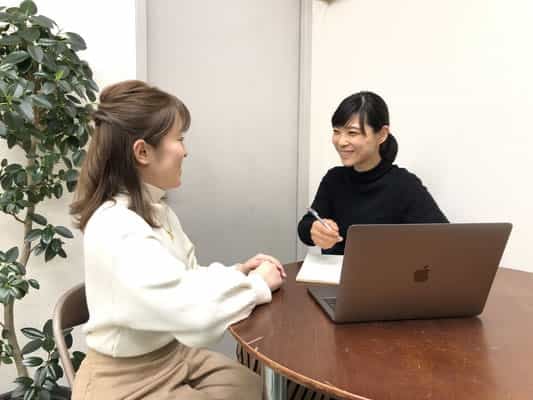
In a trial lesson you actually draw illustrations or manga, so you can see what the classroom is like and how the instructors teach.
If you already know what you want to draw, the lesson builds on that.
If not, the instructor talks with you and works out what to draw together with you.
After the trial we explain how the school works, but we never push you to enrol.
Please use the trial to see whether this is a place you could keep coming to.
How much is a trial lesson, and how long does it take?
A trial lesson is ¥2,000 (tax included).
It takes 120 minutes, the same as a regular lesson, including time to explain the school.
For children in the middle and final years of kindergarten it is 90 minutes.
Do I have to decide to enrol on the day of the trial?
There is no need to decide to enrol on the day of your trial lesson.
Children may need to talk it over with their family at home, and adults may have family or work to consider.
We never use pushy sales, so please come to your trial lesson with peace of mind.
Can parents watch?
Yes, parents can watch.
In trial lessons and regular lessons alike, parents can see how their child is doing.
If “It’s a new place, so my child seems nervous” or “I’d like to see how the teacher teaches,” you can watch from close by.
The classroom has one or two chairs for parents.
Just dropping off and picking up is fine too.
For children in the early years of elementary school, parents can just drop off and pick up if the child is fine alone, or wait on a chair if the child is calmer with a parent there.